

MindPeer
Mind-Alliance Systems · Marketing
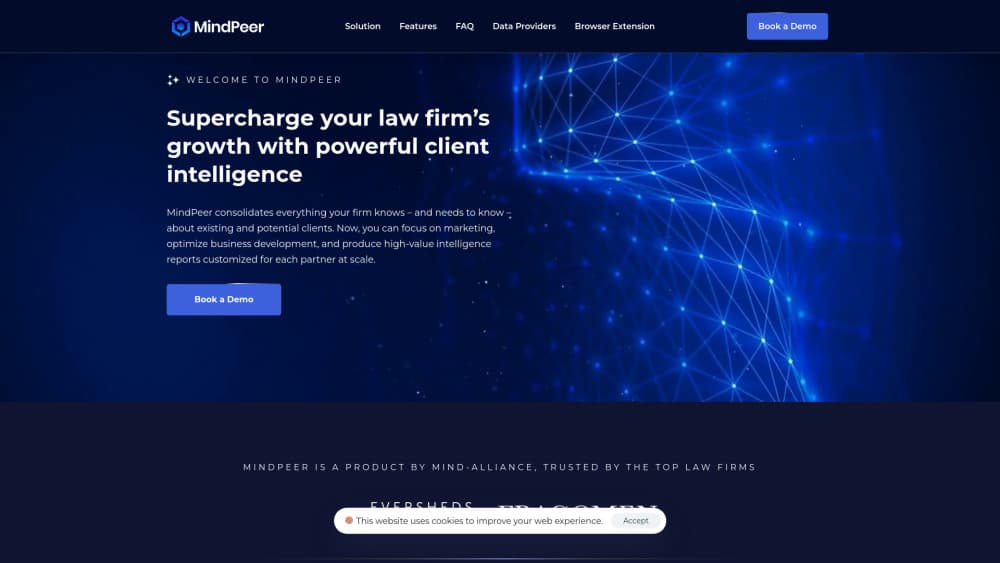
MindPeer is an AI research platform from Mind-Alliance Systems that turns analyst context and vetted sources into confidence-rated intelligence briefs, with explicit gaps.
About MindPeer
What Is MindPeer
MindPeer is a structured intelligence research platform for analysts who brief senior leaders. It is sold by Mind-Alliance Systems, a company that has spent years building knowledge management and business intelligence software for law firms, government teams, and corporate strategy units. The product treats research as a workflow, not a prompt box. An interview with the analyst comes first, source evaluation comes second, and the written brief comes last.
The problem it targets is relevance. An AI research assistant can produce a tidy eight page report from a vague question, but those reports carry equal weight on every section, hide where facts came from, and say nothing about what remains unknown. MindPeer flips that: it asks what decision is being prepared, who will act on the answer, and which information requirements must be met before research starts. Every finding then carries a confidence rating, and a gap register lists what is still missing and how to collect it. The output is decision-ready intelligence, not a summary with footnotes.
The limit is scope. MindPeer is built for teams that need defensible intelligence: national security, competitive intelligence, due diligence, risk, and investment research. There is no self-serve signup, no published price list, and no consumer features. Independent analysts who just want a cheap AI summarizer will find it heavy and likely out of budget. The platform also refuses to recommend or decide anything, so it will not tell a leader what to do.
Getting Started
- Request a demo through the MindPeer site. Access is arranged with the sales team, since there is no self-serve account.
- Describe the decision at hand to Intellibot, the built-in interviewer, including who the brief is for, the deadline, and any classification or source constraints.
- Review the information requirements MindPeer generates, then add or edit questions until they match the decision you actually face.
- Upload your documents and let retrieval augmented generation pull answers, each with sentence-level references.
- Build the report from confidence-rated findings, fill or acknowledge the gap register, and share it in the collaborative workspace for review.
Product Information
A quick look at MindPeer's pricing, supported platforms, and performance.
Best for
The users, tasks, and scenarios where this tool fits best.
Users
- Intelligence analysts in government and defense
- Competitive intelligence and strategy teams
- Business development and due diligence staff
Tasks
- Pre-meeting briefings
- Source evaluation
- Gap analysis
Scenarios
- A high-stakes partner meeting in 48 hours
- A quarterly competitive assessment
- A contested internal judgment
Key features
Intellibot Context Elicitation
Intellibot interviews the analyst before any research begins, asking who the reader is, which decision is being prepared, and what constraints apply. Questions adapt to the answers instead of following a fixed script. This is the step that separates a targeted brief from a generic market overview.
Information Requirements Database
A graph database links templates, sections, questions, fields, and notification alerts. In plain terms, it defines what a good intelligence product looks like before anyone starts typing. Analysts get a checklist that acts as a contract between the decision and the research effort.
Pre-Defined Intelligence Templates
Ready-made frameworks cover pre-meeting briefings, competitive assessments, due diligence reports, and market entry analyses. Each one lists required sections and mandatory data fields, which cuts the blank-page problem and keeps output comparable across analysts and quarters.
Curated Source Directory with Reliability Ratings
Every information requirement maps to sources profiled by access type, integration, reliability rating, and recency. Paid and free sources sit side by side, and an expert directory lists internal and external specialists with their areas of expertise when documents run out.
RAG Answer Extraction with Sentence References
MindPeer uses retrieval augmented generation to pull answers out of uploaded documents, then attaches sentence-level references to every extracted claim. You can click back to the exact line that supports a finding, which is what makes a brief defensible in a review meeting.
Confidence Ratings and a Gap Register
Findings carry a confidence rating, and the gap register names what is unknown along with suggested collection actions. Leaders see three things at once: what is known, how strongly it is supported, and where the evidence stops. Nothing is dressed up as certainty.
Collaborative Sensemaking Workspace
Analysts and decision-makers share one workspace where they can refine assessments, surface assumptions, and keep a record of the reasoning. Different roles get different views of the same analysis, so a policy lead and an operator can read the same brief without it being rewritten twice.
Pros and cons
Pros
- Decision-first structure: research starts from the decision and the reader, which keeps reports short and on point.
- Traceable claims: sentence-level references make source evaluation part of the output rather than an afterthought.
- Honest uncertainty: confidence-rated findings and a gap register show where evidence is thin.
- Built on intelligence tradecraft: templates and requirement fields reflect methods used in national security and competitive intelligence work.
- Role-based views: one analysis serves several readers without duplicating the writing.
Cons
- No self-serve entry: you cannot test the platform without a demo and a sales conversation, which slows evaluation.
- Price is opaque: no public tiers means budgeting requires a quote, and small teams may find the contract out of reach.
- Deliberately narrow: it will not recommend, predict, or automate a decision, so teams wanting automated answers need another tool.
- Setup effort is real: writing good information requirements takes analyst time up front, and weak inputs produce weak briefs.
Frequently asked questions
MindPeer is used to produce intelligence briefs for high-stakes decisions. Analysts define the decision context, the platform maps it to information requirements, extracts answers from documents with references, and rates confidence in each finding.
Related content
Explore related tools, skills, and articles for MindPeer.
MindPeer Alternatives

Tractionwave
TractionWave · Image · MarketingTractionWave is an AI attention heatmap tool for static ads. Upload a PNG or JPG and it returns predicted attention, ranked hotspots, and fixes before you spend budget.

OpenSEO - AI Visibility
EveryApp · Coding · Marketing · BusinessOpenSEO is an open source SEO platform for keyword research, backlinks, rank tracking, site audits, and AI visibility, with usage-based pricing and MCP access for AI agents.

Plugins Radar
Plugins Radar · Marketing · BusinessPlugins Radar tracks where your ChatGPT plugin ranks in directory and in-chat search, which competitors outrank it and what changed, with hourly checks on 9,885 listings.