

Omnia
Omnia · Coding · Marketing
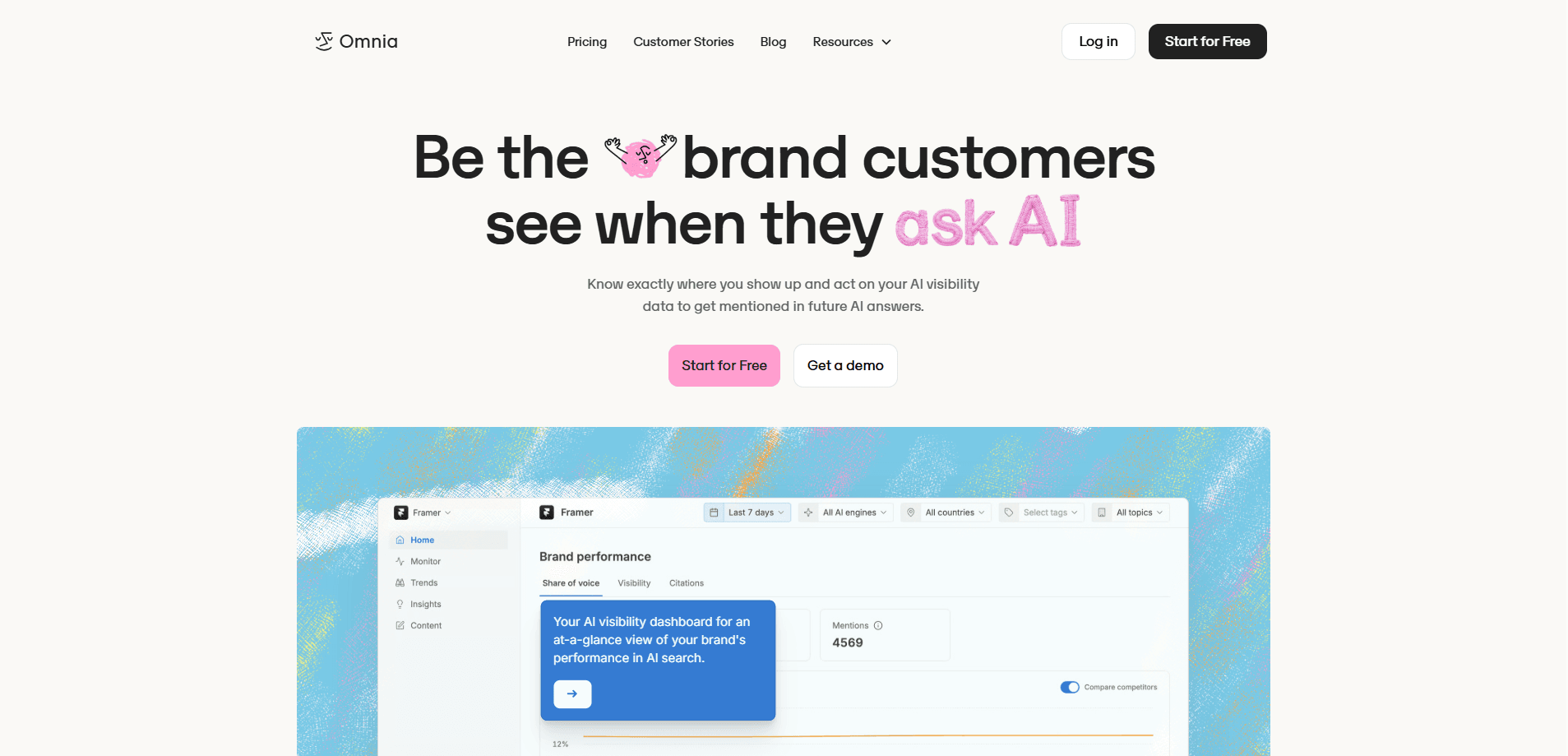
Omnia is an AI visibility platform for marketing teams that want to know how their brand shows up inside ChatGPT, Perplexity, Google AI Mode, and other AI engines. It monitors the prompts buyers ask, audits the sites those engines cite, and turns the findings into a ranked roadmap. A built-in assistant called Omnio handles most of that work. It drafts content, pitches publishers, and reports back. It's aimed at small marketing teams that don't have a dedicated GEO specialist on staff.
About Omnia
What Is Omnia
Omnia is AI visibility software that tracks your brand's presence across major AI search engines and tells you what to do about it. You give it a set of prompts your buyers might type, and it checks whether you get mentioned, how competitors compare, and which sources the engines pull from. The point is to stop guessing about a channel that most teams have zero data on.
The platform is a GEO tool that sits somewhere between a monitoring dashboard and a work queue. It doesn't just show you a share-of-voice number. It reads your data nightly and kicks off projects, so the output is a list of things to fix rather than a chart to interpret. Pricing starts at €79/month for the Growth tier, which keeps it within reach of startups rather than enterprise-only budgets.
The biggest limitation is scope. Omnia watches four AI engines by default, so unlocking Claude, Gemini, or Microsoft Copilot takes a request. If your audience lives entirely inside one niche tool that isn't on the list, you won't get coverage there.
Getting Started
- Create an account on the Omnia site and pick a plan. No credit card is needed to start.
- Add your brand and a starter set of prompts that reflect what your buyers actually ask.
- Let Omnia run its first scan, then review the share-of-voice and citation report it generates.
- Connect Omnia to Claude, ChatGPT, or Cursor through the MCP integration if you want to query it from your own assistant.
- Approve the ranked projects Omnio proposes and work through them in order of impact.
Product Information
A quick look at Omnia's pricing, supported platforms, and performance.
Best for
The users, tasks, and scenarios where this tool fits best.
Users
- In-house marketers
- SEO and content leads
- Agencies
Tasks
- Tracking AI share of voice
- Finding citation gaps
- Drafting and placing content
Scenarios
- A startup launching into a category where buyers now ask ChatGPT first and Google second, and nobody on the team knows where they stand.
- A seasonal business tracking how visibility shifts month to month, like hospitality brands juggling high and low travel periods.
- A regulated market where you need a documented, repeatable process for monitoring brand claims inside AI answers.
Key features
AI Visibility Tracking
Omnia checks how your brand appears across ChatGPT, Perplexity, Google AI Mode, and Google AI Overviews, with Claude, Gemini, and Microsoft Copilot available on request. The core of AI search tracking is share of voice against competitors, and it flags sentiment too. So you can see whether AI answers describe you positively or lump you in with everyone else. That split matters more than raw mentions.
Prompt Discovery
The platform finds the prompts your buyers ask rather than making you guess them. Growth monitors up to 25 prompts, Pro up to 100, and Enterprise over 200. Why does that matter? AI answers are prompt-specific. You might dominate one phrasing and vanish on another that means the same thing.
Omnio, the GEO Assistant
Omnio is the agent layer that does the work. It reads your data nightly, turns findings into scoped projects, and drafts or rewrites pages built to win a specific prompt. The pitch is blunt: it handles most of the routine GEO work so you orchestrate the rest. You still approve every action before it ships, which is the kind of guardrail that matters when an agent is writing in your brand's voice and emailing publishers on your behalf.
Third-Party Outreach
Omnia finds the sites worth pitching, drafts the outreach emails, and can send them from your own inbox after you approve. Think of it as brand monitoring in LLMs that ends in a sent email, not a flagged report. That's a step beyond monitoring tools that stop at recommendations. Placements earned this way feed back into the next scan, so the loop closes on itself.
Practical Roadmaps
Findings get ranked by impact and turned into a roadmap you can actually work through. Instead of a raw export of citation data, you get a prioritized list. That matters. For small teams, the ranking is the difference between a tool that gets used and one that gets abandoned after the first report.
MCP Integration
You can connect Omnia to Claude, ChatGPT, or Cursor through the Model Context Protocol. Setup takes about a minute according to the company. It means you can pull share-of-voice data, analyze citations, and track prompts without leaving the assistant you already work in. No tab-switching.
Pros and cons
Pros
- Monitors four AI engines by default and expands to seven, covering the ones buyers actually use.
- Turns monitoring data into ranked projects, so the output is a work list, not a dashboard to decode.
- Omnio handles drafting and outreach, which saves teams without a GEO specialist the hiring cost.
- MCP integration lets you query visibility data from Claude, ChatGPT, or Cursor.
- Entry pricing of €79/month is low compared to the €45-60k a dedicated in-house GEO hire costs annually.
Cons
- No free plan, so you can't test coverage before paying.
- Claude, Gemini, and Microsoft Copilot require a request before they turn on, which adds friction.
- The 25-prompt cap on the Growth tier runs out fast if you track a broad category.
Frequently asked questions
Omnia monitors how your brand appears in AI search engines like ChatGPT and Perplexity, then turns that data into a ranked action plan. It tracks prompts, audits citations, and drafts content to improve where you show up. Simple as that.
Related content
Explore related tools, skills, and articles for Omnia.
Omnia Alternatives
Forefront
Forefront · CodingForefront is a web platform for building with open-source AI. It lets you fine-tune leading open-source language models on your own data, evaluate how they perform, and run them through an API or export them to host yourself. Developers who want the convenience of a closed-source platform but insist on owning their models and data are the target audience here.

Startkit
StartKit.AI · CodingStartkit is a boilerplate for building AI SaaS and AI wrapper products. Think of it as an AI startup boilerplate with the boring parts already wired up: authentication, Stripe and Lemon Squeezy payments, usage limits, transactional email, and an AI API starter that talks to OpenAI, Anthropic, Groq, or Llama. You clone the repo, set your price, and start on the part of your product that people actually pay for. It's Next.js under React and Tailwind, so most of the boilerplate code already feels familiar.
Testim
Tricentis · CodingTestim is an AI-powered test automation platform for building and running end-to-end tests across web, mobile, and Salesforce applications. It leans on machine learning to keep tests stable when an interface changes, so teams spend less time fixing broken selectors. Not bad for an automated testing tool you can start using today. You create tests by recording actions in a browser, then optionally add JavaScript when you need more control. It's a solid pick for busy QA teams.