

Omnilert
Omnilert · Marketing
Omnilert pairs AI gun detection with an emergency notification system, so existing cameras can spot a firearm and trigger alerts, lockdowns, and a police response in seconds.
About Omnilert
What Is Omnilert
Omnilert is a safety platform built around two jobs that used to live in separate products: spotting a weapon on camera and telling everyone what to do about it. The company started in 2004 as a campus alerting service and now sells AI gun detection, mass notification software, and the automation that connects them.
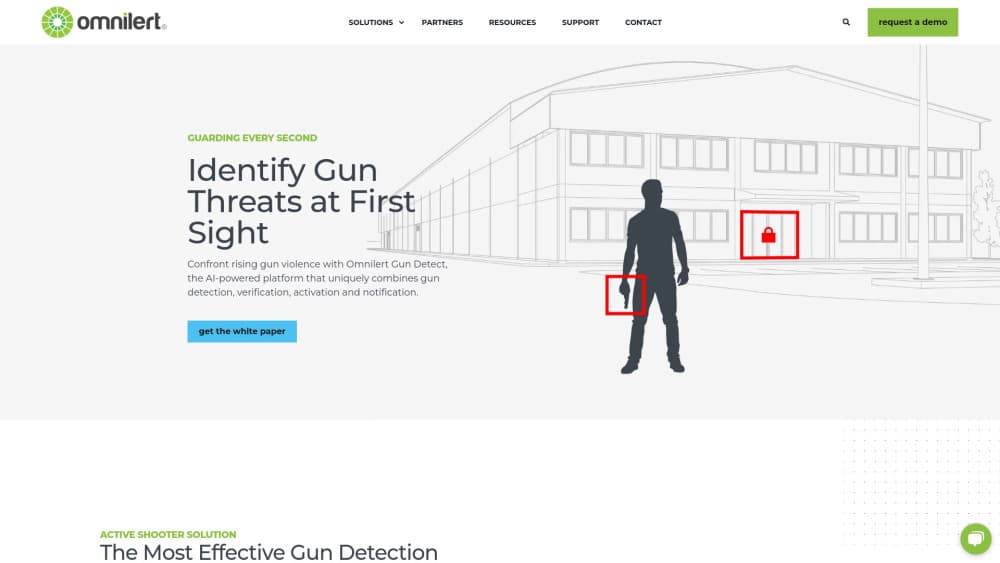
The pitch is simple. Most buildings already have cameras pointed at entrances, hallways, and parking lots. Omnilert runs visual AI on those feeds, flags a visible firearm, and hands the clip to a human reviewer. Once that person confirms the threat, the platform can lock doors, sound alarms, push alerts to phones, and notify police without anyone dialing a list of numbers.
The limits matter as much as the features. Omnilert doesn't sell to individuals, publishes no self-serve pricing, and needs a paid deployment project before anything goes live. Detection also depends on camera placement and image quality, so a blurry or badly angled camera weakens the whole system.
Getting Started
- Talk to the sales team and scope the site: camera count, buildings, response partners, and the plan that fits.
- Connect your video management system and access control so Omnilert can read camera feeds and act on them.
- Set verification rules: who reviews a detection, how fast they must respond, and which alerts escalate on their own.
- Load your contact groups and run a drill before you go live with monitoring.
Product Information
A quick look at Omnilert's pricing, supported platforms, and performance.
Best for
The users, tasks, and scenarios where this tool fits best.
Users
- School districts
- Corporate security teams
- Hospitals and clinics
Tasks
- Catching a brandished firearm before shots are fired
- Sending one message to everyone at once
- Automating the first 30 seconds of a lockdown
Scenarios
- A person walks through a parking lot with a rifle
- A gas leak forces an evacuation
- A quarterly drill
Key features
Visual AI gun detection on the cameras you already own
Omnilert analyzes feeds from existing security cameras instead of asking you to buy new hardware. The company says the model was built from Department of Defense and DARPA research on real-time threat recognition. In practice, that means a camera covering a doorway or a bus loop can flag a drawn gun. The system also works outdoors, where a large share of gun violence starts and where door sensors and metal detectors never reach.
Human verification before anything triggers
No alert goes out on the model's word alone. A trained reviewer, either from Omnilert's own monitoring team or your security operations center, checks the image and confirms whether a gun is visible. Omnilert calls this human-in-the-loop verification, and it exists to cut false alarms before they reach a school full of people. You decide who reviews, how quickly they must respond, and what happens if they don't.
Automated emergency response across building systems
After verification, the platform can act on its own. It locks doors, sounds alarms, turns on digital signage with instructions, and pushes incident details to first responders. Omnilert says it connects to more than 50 security products, including video management systems and access control platforms from vendors such as Brivo and Lenel. This is the part that separates a gun detection tool from a full response system, because detection alone doesn't stop anyone.
Mass alerts that reach people on the channels they check
The emergency notification system sends text messages, emails, voice calls, desktop pop-ups, and app notifications from one console. Messages can go to a whole campus or to one floor, and pre-written templates cut the time between decision and delivery. Recipients can reply, confirm they are safe, or report what they see. The mobile app also includes a panic button for staff who spot a threat away from a desk.
Camera health monitoring
A detection system is only as good as its video feed. Omnilert uses AI to flag camera problems such as blur, obstruction, changed field of view, poor lighting, and physical damage. The company says it can identify more than 120 distinct issues. For a facilities team, that turns a passive camera network into something that tells you when it stops working properly.
Open integrations and a documented API
Omnilert is designed to sit inside an existing security setup rather than replace it. The platform offers API access on every plan, and the company publishes integrations for video, access control, and incident management tools. The benefit shows up during a real incident: the alert, the door lock, and the police notification all fire from one event instead of three separate dashboards.
Pros and cons
Pros
- Detection runs on existing cameras, so the hardware cost stays close to zero and the project timeline shortens.
- Human verification is built into the flow, which keeps false alarms away from staff who already ignore too many notifications.
- One platform covers detection, notification, and automation, so a security team doesn't stitch three vendors together.
- Mobile app, two-way messaging, and a panic button give staff a way to report problems from anywhere on site.
- The DHS SAFETY Act designation gives buyers a documented liability shield, which procurement teams tend to ask about.
Cons
- Pricing is quote-only, so you can't compare plans without a sales call, and the published range of roughly $2,500 to $15,000 per year is wide.
- Detection quality depends on camera angles, lighting, and bandwidth, which means an older camera fleet may need upgrades that push the real cost up.
- The platform is built for organizations with staff to run it, so a small business without a security team will find the setup heavy.
- Coverage is concentrated in North America, which limits support options for sites elsewhere.
Frequently asked questions
Omnilert watches security camera feeds for visible firearms and, once a person confirms the threat, sends alerts and triggers building responses such as door locks, alarms, and police notification. It also runs a standard emergency notification system for fires, weather, and other incidents.
Related content
Explore related tools, skills, and articles for Omnilert.
Omnilert Alternatives

Tractionwave
TractionWave · Image · MarketingTractionWave is an AI attention heatmap tool for static ads. Upload a PNG or JPG and it returns predicted attention, ranked hotspots, and fixes before you spend budget.

OpenSEO - AI Visibility
EveryApp · Coding · Marketing · BusinessOpenSEO is an open source SEO platform for keyword research, backlinks, rank tracking, site audits, and AI visibility, with usage-based pricing and MCP access for AI agents.

Plugins Radar
Plugins Radar · Marketing · BusinessPlugins Radar tracks where your ChatGPT plugin ranks in directory and in-chat search, which competitors outrank it and what changed, with hourly checks on 9,885 listings.