

Realbotix
Realbotix Corp. · Chatbot
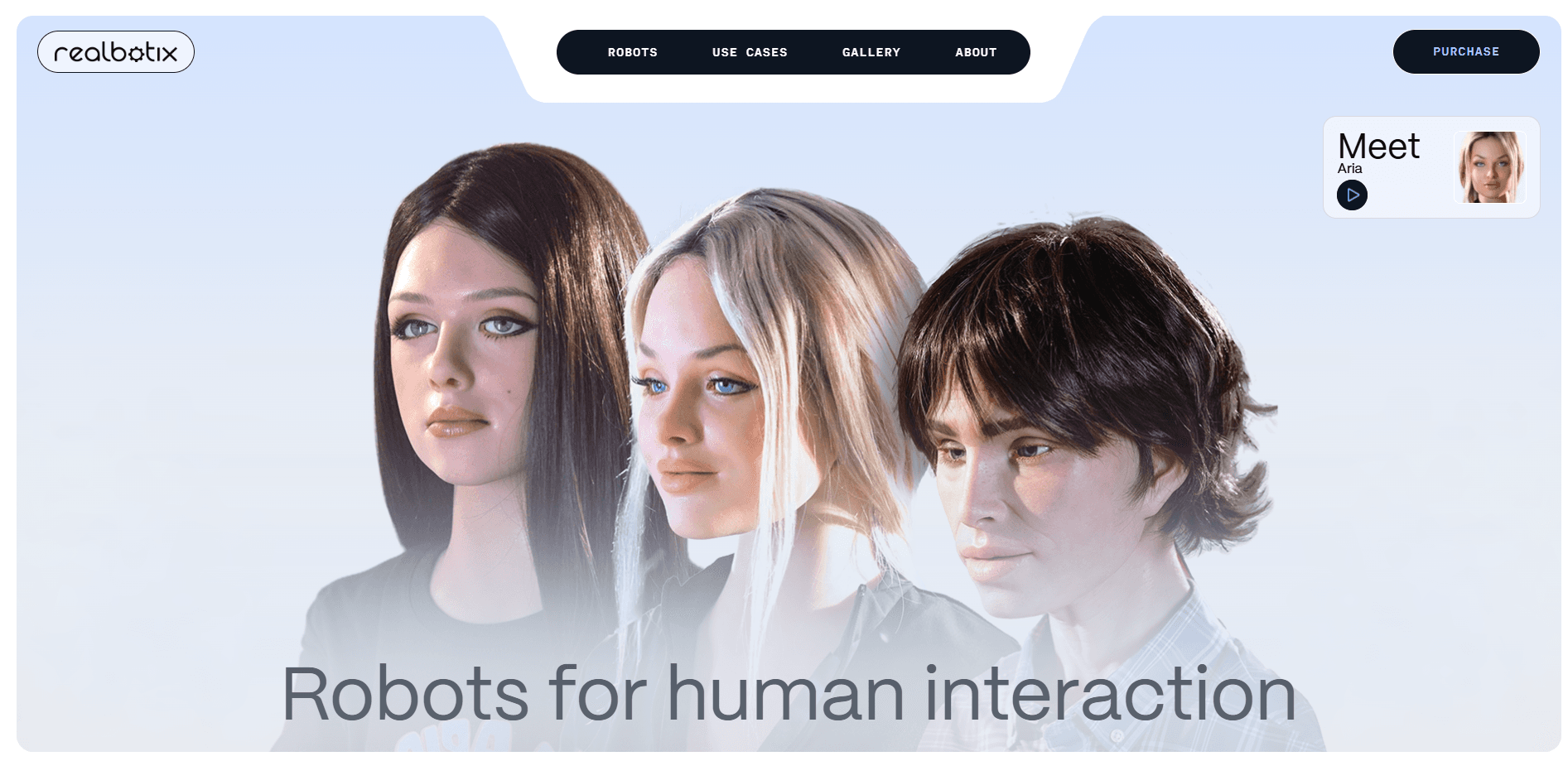
Realbotix builds lifelike humanoid robots paired with conversational AI and its Vinci Vision system. The company targets companionship plus service roles in events, healthcare and education.
About Realbotix
What Is Realbotix
Realbotix is a robotics company that makes humanoid robots and the AI that runs them. The hardware side is known for lifelike faces and modular bodies, and the software side centers on conversational AI with a propriety vision system called Vinci Vision. The company lists on the TSX Venture Exchange under the ticker XBOT and has offices tied to Las Vegas and Toronto.
This Realbotix overview covers both halves of the business, because the company now sells them as two separate things. You can buy a companion robot for personal use, or license the AI and vision platform for a service robot that greets visitors, trains staff or guides students. The robot is the part people see, and the platform is the part that does the work.
One thing to know before you look at prices: these are premium machines, not consumer gadgets. The companion models start in the tens of thousands of dollars, and service deployments are sold through the company rather than a checkout page.
Getting Started
- Decide which side you need, a companion robot for personal use or the AI platform for a service deployment
- Contact Realbotix through the site to discuss the robot configuration, face and body options, and the use case
- For service work, load a custom knowledge base so the robot answers from your own content
- Run a pilot on site, then scale to more units or more locations from the same platform
Product Information
A quick look at Realbotix's pricing, supported platforms, and performance.
Best for
The users, tasks, and scenarios where this tool fits best.
Users
- Event and hospitality teams
- Healthcare and care providers
- Education and training departments
- Robotics researchers and integrators
Tasks
- Natural conversation
- Face tracking and eye contact
- Interactive presentations
- Personal companionship
- Data capture
Scenarios
- A trade show stand that needs to pull visitors in
- A hospital or care home piloting companion support
- A campus open day
- A corporate training room
- Switching robots without retraining staff
Key features
The Aria Companion Robot
Aria is the flagship humanoid and the one most people have seen. It has a lifelike face built on roughly 17 motors in the head and neck, which drive facial expressions rather than just speech. The body is modular, and the face, hair and color can be swapped through magnetic connectors. Aria comes in a few sizes, from a tabletop bust to a full-body model on a rolling base.
Vinci Vision
Vinci Vision is the company's propriety vision system, and it's the reason the robots hold eye contact instead of staring past you. It tracks faces in real time, recognizes speech and follows movement, which lets the robot react to who is actually in the room. It also captures interaction data during a session, which is useful for events where you want numbers on how many people engaged.
AI-Agnostic Conversational Platform
The AI platform behind the robots is model-agnostic, so it can plug into different large language models rather than being locked to one. That matters for buyers who already have a preferred AI vendor or who want to swap models as better ones ship. The platform supports custom knowledge bases, so an organization can load its own material and have the robot speak from it instead of generic answers.
Cross-Device Consistency
The same AI platform runs across robots, desktops, laptops and mobile devices. Someone can talk to the robot at an event, then continue the same interaction through a desktop or phone later, and get a consistent experience. For businesses, that means the companion or assistant isn't tied to a single physical unit.
Multilingual Conversation
Aria speaks 15 core languages and more than 147 dialects in real time, according to the company. That breadth is aimed at service deployments where visitors arrive from many places. A single robot can greet a guest in their own language without a separate setup per region.
Modular Hardware Design
The robots are built around swappable parts. Faces attach with magnets, hair and colors change, and the body is designed so components can be replaced. The company has worked on RFID tags that would let a robot recognize which face is attached and adjust its expressions and personality to match. Buyers can change a robot's look without buying a new unit.
Pros and cons
Pros
- Lifelike faces and eye contact stand out from the boxy service robots most venues already have
- The AI platform is model-agnostic, so it isn't tied to a single language model vendor
- A single platform covers robots and personal devices, which keeps interactions consistent across touchpoints
- Modular faces and bodies let you change a unit's look instead of replacing the whole robot
- Service deployments are already running in real settings, including a telecom company's experience center
Cons
- Companion models start at $10,000 and run to $175,000, so they sit well outside consumer budgets
- The full-body models move on a rolling base, not legs, so they cannot walk or navigate stairs
- There's no free plan or self-serve signup, and pricing for service deployments is only available through a sales conversation
- Some hardware features, like RFID-based face detection, have been described as in development rather than shipped
Frequently asked questions
Realbotix makes lifelike humanoid robots and the AI platform that runs them. Its flagship robot is Aria, and its software side includes conversational AI with custom knowledge bases and a vision system called Vinci Vision. The company sells both companion robots for personal use and service deployments for businesses.
Related content
Explore related tools, skills, and articles for Realbotix.
Realbotix Alternatives

Knocket
Knocket (Tencent RTC team) · Productivity · Business · ChatbotKnocket is a free live chat and contact page tool that lets visitors message you from your website, app, or a shareable link, with every reply handled from Telegram or one inbox.
Agibot
Agibot · Productivity · AI Assistant · ChatbotAgibot is a personal AI agent for Mac that keeps running after you close the window, runs routines on a schedule, and works from Telegram or Slack with your own API keys.

Melete
Melete · Productivity · AI Assistant · ChatbotMelete is an AI workspace for teams where agents research, draft, and act in Slack, Notion, Linear, and GitHub. Shared memory and approval gates keep people in control.