

SellerClaw
SellerClaw · Coding · Business
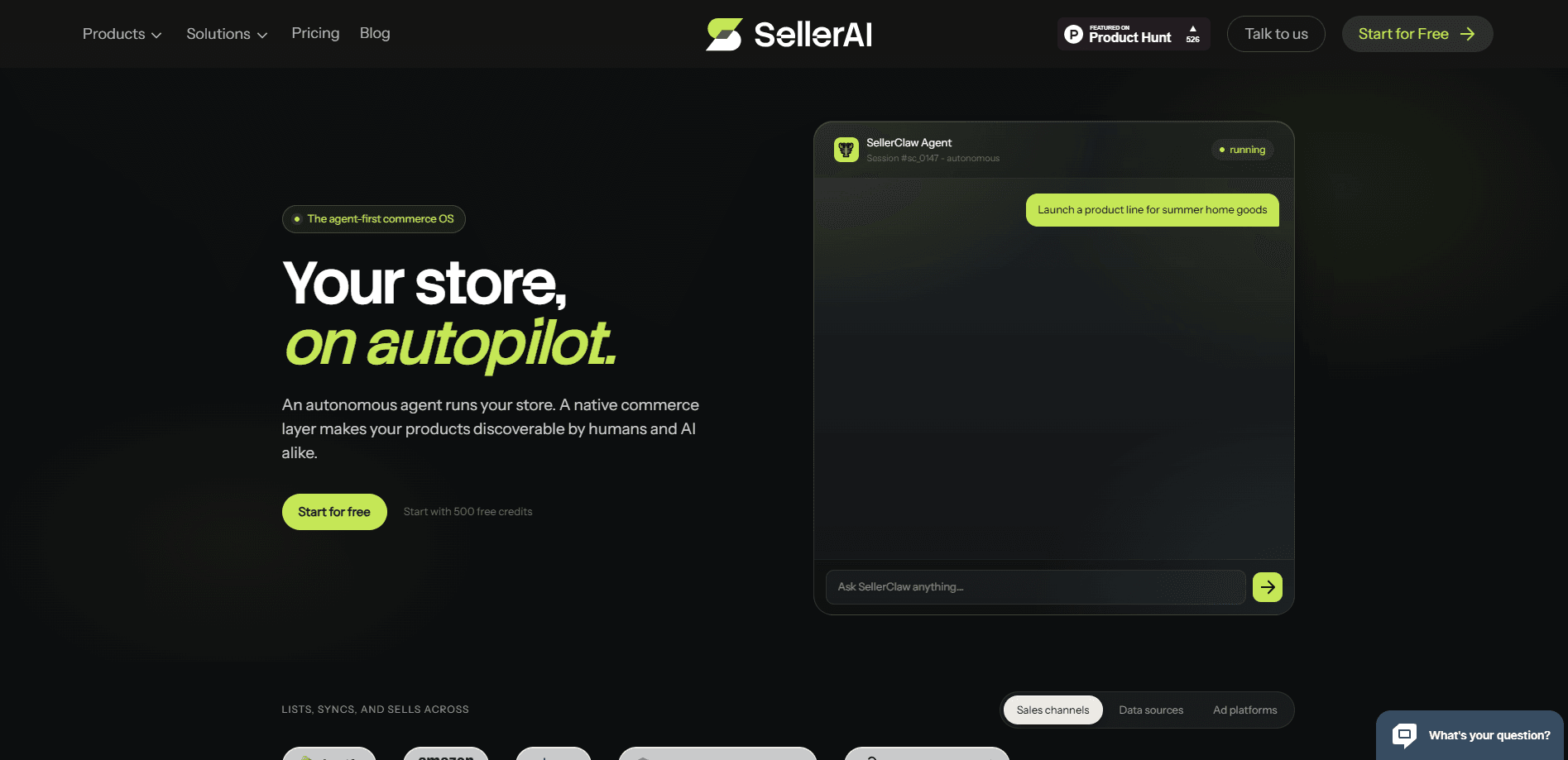
SellerClaw is an autonomous commerce agent that runs e-commerce operations end to end. It sources products, writes listings, syncs sales channels, manages ads, and handles daily store work on its own. You can use it as a hosted service or deploy a self-hosted local version, with approval guardrails you configure yourself. Think of it as an AI e-commerce agent that actually runs the store instead of just writing advice about it.
About SellerClaw
What Is SellerClaw
SellerClaw is an AI agent platform built for people who run online stores. Instead of one chatbot that answers questions, it uses a team of specialized agents that handle listing creation, pricing, ad management, and customer support across channels like Shopify and eBay. A supervisor agent coordinates the group, so you give one instruction and the work gets split up. The problem it targets is familiar to anyone selling online. Running a store is a full-time job made of repetitive tasks: writing product titles, checking competitors, adjusting prices, replying to buyers, and moving data between platforms. Hired help costs money. Single-purpose tools leave gaps you still fill by hand.
Its most important limit is that autonomy needs supervision to be safe. AI pricing and AI listings can go wrong fast, so SellerClaw is built around human-in-the-loop checkpoints. Every action is visible, and you decide how much runs automatically. The product is also early stage. Expect rough edges.
Getting Started
- Create an account on the official site. The free start doesn't require a credit card.
- Connect your sales channels, such as Shopify and eBay, so the agents can read real store data.
- Tell the supervisor agent what you want to sell or fix, in plain language.
- Set your guardrails: budget caps, price floors, and which actions need approval.
- Review the agent's proposed actions, approve or adjust them, and let the approved work run.
Product Information
A quick look at SellerClaw's pricing, supported platforms, and performance.
Best for
The users, tasks, and scenarios where this tool fits best.
Users
- Solo founders
- Cross-border sellers
- Growing brands
Tasks
- Writing product listings
- Syncing sales channels
- Managing ads and pricing
- Handling daily store work
Scenarios
- Launching a new product across several channels at once, where listings would normally take a full day.
- Watching competitor prices while you sleep, so changes are flagged before they cost you sales.
- Running three stores as one person, using approval checkpoints to stay in control.
- Replacing a separate eBay listing tool and a manual pricing sheet with one AI agent for sellers.
Key features
Multi-Agent Team With a Supervisor
SellerClaw doesn't rely on one general model. It splits store work across agents built for different jobs, and a supervisor agent coordinates them. You give one instruction. The relevant agent picks it up. The point is that sourcing, listing, and ads don't fight over the same context, which matters once your store grows past a handful of products and every task starts touching the same data.
End-to-End Store Operations
The platform covers the full loop: product sourcing, listing creation, channel sync, ad management, order fulfillment, and customer support, which means you're not stitching together five different subscriptions just to get through a normal selling week. That breadth is the selling point, since most tools only cover one step. Plain online store automation, in other words. You spend less time moving data between apps, and more time on decisions that need a human.
Human-in-the-Loop Guardrails
Every action is visible, and you can require approval before it takes effect. Budget thresholds, inventory floors, discount rules, and profit protection lines keep the agents inside limits you set. Not bad for peace of mind. This is the feature that makes unattended pricing less scary, because the agent can't quietly slash your margins.
Multi-Channel Support
SellerClaw connects to channels including Shopify and eBay, and it's built to operate them from one place. So Shopify automation and eBay listings live in the same view, which cuts the tab-hopping that eats your morning. Instead of logging into each dashboard, you manage listings and support from a single view. Multi-channel sellers get the most out of it, since the data lives together.
Hosted or Self-Hosted Deployment
You can run SellerClaw as a hosted service or deploy a local version on your own machine. Self-hosting matters if you want your store data to stay close, or if you prefer to control the stack. The trade-off is setup effort and maintenance on your side, and if you have never configured a server before, that learning curve can take an afternoon or more before the agents are doing anything useful.
Automated Pricing and Ad Management
The agents watch the market and adjust prices and ad settings within your rules. Price floors stop race-to-the-bottom drops, and budget caps stop runaway spend. For stores with lots of similar SKUs, this takes a repetitive chore off your plate. It's the kind of work nobody enjoys doing by hand, especially when you're comparing dozens of competitor listings at two in the morning and trying to decide whether a two percent cut is worth the lost margin.
Pros and cons
Pros
- Covers many store operations in one place, from listings to support.
- Guardrails and approval steps keep autonomous actions inside limits you set.
- Works across multiple channels, so you're not locked into a single platform.
- Free to start without a credit card, which lowers the cost of trying it.
- Self-hosted option gives you control over where store data lives.
Cons
- Early-stage product, so features and reliability can still change between updates and you may need to relearn parts of the workflow.
- Full autonomy needs regular review, which means it doesn't remove the human entirely.
- Heavy setup if you self-host, and cross-border edge cases like local payments still need manual attention.
Frequently asked questions
It runs e-commerce operations for you. The agents source products, write listings, sync sales channels, manage ads and pricing, handle orders, and answer routine customer questions, coordinating through a supervisor agent.
Related content
Explore related tools, skills, and articles for SellerClaw.
SellerClaw Alternatives
Forefront
Forefront · CodingForefront is a web platform for building with open-source AI. It lets you fine-tune leading open-source language models on your own data, evaluate how they perform, and run them through an API or export them to host yourself. Developers who want the convenience of a closed-source platform but insist on owning their models and data are the target audience here.

Startkit
StartKit.AI · CodingStartkit is a boilerplate for building AI SaaS and AI wrapper products. Think of it as an AI startup boilerplate with the boring parts already wired up: authentication, Stripe and Lemon Squeezy payments, usage limits, transactional email, and an AI API starter that talks to OpenAI, Anthropic, Groq, or Llama. You clone the repo, set your price, and start on the part of your product that people actually pay for. It's Next.js under React and Tailwind, so most of the boilerplate code already feels familiar.
Testim
Tricentis · CodingTestim is an AI-powered test automation platform for building and running end-to-end tests across web, mobile, and Salesforce applications. It leans on machine learning to keep tests stable when an interface changes, so teams spend less time fixing broken selectors. Not bad for an automated testing tool you can start using today. You create tests by recording actions in a browser, then optionally add JavaScript when you need more control. It's a solid pick for busy QA teams.