

Tapesearch
Tapesearch · Coding
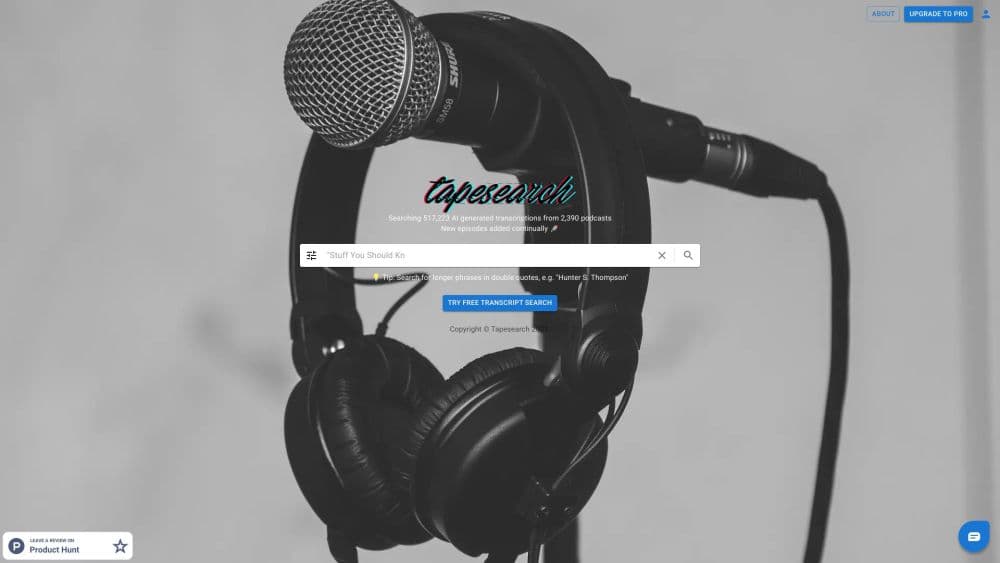
Tapesearch is a podcast transcript search engine. It scans 5.8 million transcripts, jumps to the exact timestamp, and adds AI chat, alerts, trends, and an API.
About Tapesearch
What Is Tapesearch
Tapesearch is a web app that searches what people actually said on podcasts. Type a phrase and it returns matching lines from AI-generated transcripts, each tied to a moment in the audio, so you can hear the quote in context instead of scrubbing through a three-hour episode.
The index holds 5.8 million transcripts from 11,755 shows, weighted toward the most popular titles by Apple Podcasts rating count. That makes the tool useful when spoken evidence matters: a reporter checking a claim, an analyst watching how a brand gets discussed, a podcaster digging through old episodes.
Coverage is the main limit. Paywalled and exclusive shows, Spotify originals included, aren't in the database. Transcripts come from speech recognition, so names, fast talk, and crosstalk can come out wrong, and timestamps drift when long music or silence sits in the file.
Getting Started
- Open tapesearch.com and search a phrase, a name, or a quoted line. You can run a basic search without an account.
- Narrow the results by podcast title or episode title, or switch the query mode to semantic or hybrid for concept matching.
- Open AI Chat to ask a question across several shows and get an answer with links back to each episode.
- Create a free account for saved alerts, or pick a paid plan for transcript downloads, trend charts, and API access.
Product Information
A quick look at Tapesearch's pricing, supported platforms, and performance.
Best for
The users, tasks, and scenarios where this tool fits best.
Users
- Journalists and fact-checkers
- Market researchers and analysts
- Podcasters
Tasks
- Finding a specific quote
- Tracking brand mentions
- Charting topic interest over time
- Feeding podcast data into an app
Scenarios
- Breaking news on a deadline
- Advertising research
- Academic work in linguistics or political science
Key features
Timestamped Transcript Search
Every result points to a line in a transcript and the second it was spoken, with a player that starts at that point. You skip the guesswork of scanning a summary and go straight to the source audio.
Lucene, Semantic, and Hybrid Queries
Search runs in three query modes: Lucene for operators, phrases, and field filters, plain text for literal strings, and semantic or hybrid retrieval that matches meaning rather than exact wording. The semantic modes use a multilingual embedding model, which helps when a speaker uses different words for the same idea.
AI Chat Across Episodes
Chat answers questions from several podcasts at once instead of one episode at a time. Ask how a topic has been covered this year and you get a written answer with citations, which saves the work of stitching together separate searches.
Keyword Alerts
Podcast mention alerts arrive by email when a new episode mentions a term you registered. Pro includes two alerts, Insights raises that to 50, and the alerts are the practical way to monitor a company or a person without running searches every morning.
Trend Charts
The trends view plots how often a term appears in podcasts over time and lets you download the data. Spikes line up with events, product launches, or news cycles, so the chart works as a rough measure of public conversation.
Transcript Downloads
Paid plans handle podcast transcript download in TXT, SRT, VTT, or JSON. SRT and VTT keep timestamps, which matters if you plan to subtitle video or sync quotes to audio, while plain text suits reading and text analysis.
API and MCP Server
The podcast API opens search and transcript download endpoints with a limit of 2,000 requests per day. The same plan includes a hosted MCP server at mcp.tapesearch.com, so Claude and other assistants can query the database with no install step.
Pros and cons
Pros
- Large open index: 5.8 million transcripts from 11,755 podcasts in one search box.
- Exact sourcing: timestamps and audio links let you verify a quote before you publish it.
- Alerts run on their own: a tracked term brings new mentions to your inbox instead of requiring daily searches.
- Developer access: a documented API and a hosted MCP server cover app builders and AI assistant users.
- Low entry price: Pro costs $17 per month, and a free account covers basic searching.
Cons
- Coverage gaps: paywalled and Spotify-exclusive shows are missing, and the index favors popular Apple-ranked podcasts.
- Transcription errors: names, rapid speech, and overlapping voices can produce wrong text or shifted timestamps.
- Most useful tools sit behind a paywall: filters, AI chat, downloads, and alerts need at least the $17 Pro plan.
- Browser only: there is no mobile app, so phone users work through the website.
Frequently asked questions
Tapesearch is a search engine for podcast transcripts. It finds the phrase you type inside spoken audio and links you to the exact timestamp, so you can hear the quote rather than read a summary.
Related content
Explore related tools, skills, and articles for Tapesearch.
Tapesearch Alternatives
Forefront
Forefront · CodingForefront is a web platform for building with open-source AI. It lets you fine-tune leading open-source language models on your own data, evaluate how they perform, and run them through an API or export them to host yourself. Developers who want the convenience of a closed-source platform but insist on owning their models and data are the target audience here.

Startkit
StartKit.AI · CodingStartkit is a boilerplate for building AI SaaS and AI wrapper products. Think of it as an AI startup boilerplate with the boring parts already wired up: authentication, Stripe and Lemon Squeezy payments, usage limits, transactional email, and an AI API starter that talks to OpenAI, Anthropic, Groq, or Llama. You clone the repo, set your price, and start on the part of your product that people actually pay for. It's Next.js under React and Tailwind, so most of the boilerplate code already feels familiar.
Testim
Tricentis · CodingTestim is an AI-powered test automation platform for building and running end-to-end tests across web, mobile, and Salesforce applications. It leans on machine learning to keep tests stable when an interface changes, so teams spend less time fixing broken selectors. Not bad for an automated testing tool you can start using today. You create tests by recording actions in a browser, then optionally add JavaScript when you need more control. It's a solid pick for busy QA teams.