

TurboLens
TurboLens · Image
TurboLens is an API-first image forgery detection and document intelligence platform for teams that need to verify documents before KYC, lending, or insurance review.
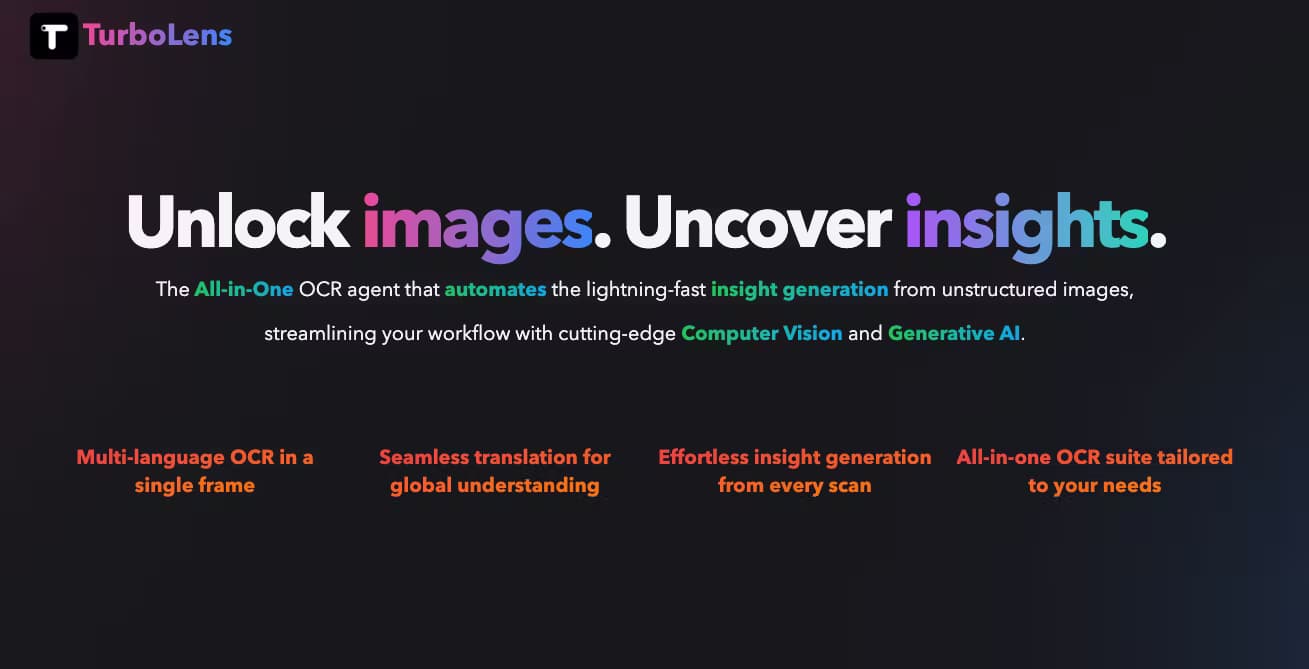
About TurboLens
What Is TurboLens
TurboLens is a visual-forensics and document verification API. It does one job well: catching manipulated documents the moment they arrive, before anything downstream trusts them. Short version: it screens, then extracts. It runs two separate checks. Image forgery detection looks for local edits inside an existing picture, such as splicing, copy-move changes, retouching, and altered fields. AI-generated and AI-edited detection screens whether generative tools created or changed the image. Keeping the two apart matters, because a forged scan and a synthetic one are different risks that often need different review rules.
The second half of the platform handles the documents themselves. After a file passes authenticity checks, TurboLens classifies it, extracts configured fields and tables, and returns structured JSON shaped for your data stores and reviewer tools. This is where it stands out from a plain OCR API. Basic OCR hands you characters. That's it. TurboLens tries to preserve the relationships between fields, rows, and layout regions so the output actually fits a workflow. It leans heavily into Southeast Asian formats. Think regional scripts, bilingual fields, and local invoice, ID, and contract layouts.
The limits are worth knowing up front. This is an enterprise, sales-led API with no self-serve checkout, so you'll need to talk to the team before you can price it or test it at scale. No free tier. No public price list. The AI-generated image detection layer is still in early access, meaning its accuracy is improving and it's meant to support human review rather than replace it. Forgery detection is production-ready; the synthetic-media side isn't fully there yet.
Getting Started
- Request API access from the TurboLens team and get your credentials for the visual-forensics endpoint.
- Send a document page or image to the API before OCR and any downstream processing.
- Set your own thresholds and decide what a flagged result should do: reject, escalate, or queue for manual review.
- Read the response for a verdict, the tampered-pixel proportion, suspicious-region coordinates, and a heatmap when you need evidence.
- Route clean files straight through. Hand flagged ones to your existing review workflow.
Product Information
A quick look at TurboLens's pricing, supported platforms, and performance.
Best for
The users, tasks, and scenarios where this tool fits best.
Users
- KYC and onboarding teams
- Lending and underwriting teams
- Insurance claims handlers
- Southeast Asian operations teams
Tasks
- Detecting tampered document images
- Screening for AI-generated documents
- Extracting structured fields
- Classifying documents
- Detecting stamps and seals
Scenarios
- High-volume intake pipelines
- Document-heavy back offices
- Fraud review queues
Key features
Two Separate Detection Layers
Why does the split matter? TurboLens treats image forgery detection and AI image detection as distinct questions rather than one interchangeable score. Forgery detection looks at local manipulation in an existing file. Synthetic-media screening estimates whether generative AI created or modified it. That split lets you route each risk through the review rules it deserves.
Pixel-Level Tamper Heatmaps
Instead of a yes-or-no answer, the API returns a heatmap that highlights spliced, retouched, and copy-moved regions. Reviewers can see where an edit may have occurred. That turns a fraud flag into something explainable rather than a black-box number. Big difference. For a scam team, it's the gap between a dismissed alert and a defensible decision.
Splice and Copy-Move Detection
Forgers reuse the same tricks. The engine looks for two of them: regions copied from another source and pasted in, and areas duplicated and repositioned to fake stamps or signatures. Both are frequent in altered bank statements, IDs, and signed contracts, so catching them early protects the whole downstream decision.
AI-Generated and AI-Edited Screening
A newer layer estimates whether generative AI created or modified an image, returning an AI-generated, needs-review, or likely-human-made result plus an AI probability score. It's in early access. Treat it as a second opinion that supports human judgment, not a final verdict.
Structured Extraction Beyond OCR
After screening, TurboLens classifies the document and extracts configured fields, tables, checkboxes, and layout structure into application-ready JSON. It preserves row, column, and header relationships, which matters when a downstream system needs to trust the numbers it reads.
Southeast Asian OCR Focus
The platform is tuned for regional scripts, bilingual layouts, and local document types such as Vietnamese invoices, SEA passports, contracts, and customs forms. This is where most generic tools fall down. Teams working in those markets get cleaner results than a general-purpose OCR API typically delivers.
Configurable Review Routing
You set the threshold and decide what happens to a flagged file: reject it, escalate it, or send it to a manual queue. Clean submissions continue through the pipeline untouched. Authenticity checks don't slow down legitimate traffic.
Pros and cons
Pros
- Returns explainable evidence, including heatmaps and region coordinates, instead of a single opaque score.
- Keeps forgery detection and AI-image detection separate, so each risk can follow its own review path.
- Combines authenticity checks with document classification and structured extraction in one API.
- Strong fit for Southeast Asian scripts and layouts that general OCR tools handle poorly.
- Drops into existing pipelines as a REST call, so you keep your current OCR and case tools.
Cons
- No self-serve signup or published pricing: you have to contact sales before you can evaluate cost or run a real test.
- The AI-generated detection layer is early access, so its reliability isn't production-grade yet and it can't be treated as final.
- It's an API-first product aimed at engineering teams. There's no visual dashboard for non-technical users.
Frequently asked questions
It screens document images for manipulation and synthetic origin, then extracts structured data from the ones that pass. In practice, teams use it as an authenticity gate before OCR, KYC, lending, or claims workflows.
Related content
Explore related tools, skills, and articles for TurboLens.
TurboLens Alternatives

Tractionwave
TractionWave · Image · MarketingTractionWave is an AI attention heatmap tool for static ads. Upload a PNG or JPG and it returns predicted attention, ranked hotspots, and fixes before you spend budget.

Imejis.io
Imejis.io · Image · MarketingImejis.io is an AI design studio for agents and marketing teams. Describe an image in plain words, and it writes the copy, builds the layout, reflows it to every size, then exports a finished file.

Layoutr
Van Dijk Ontwikkeling · Image · China AILayoutr is a browser floor plan tool that scales your own plan, places furniture at true size, shows the room in 3D and renders it with AI.