

Turbotic Automation AI OPEN SOURCE
Turbotic · Coding
Turbotic Automation AI OPEN SOURCE is a community edition platform from Turbotic, the Swedish company behind an enterprise AI and automation suite. It lets developers describe the automation they want in natural language and get working workflows in return, with the core functions, integrations, and architecture open for inspection. Unlike the managed enterprise product, this edition is aimed at people who want to read the code, change it, and run it themselves.
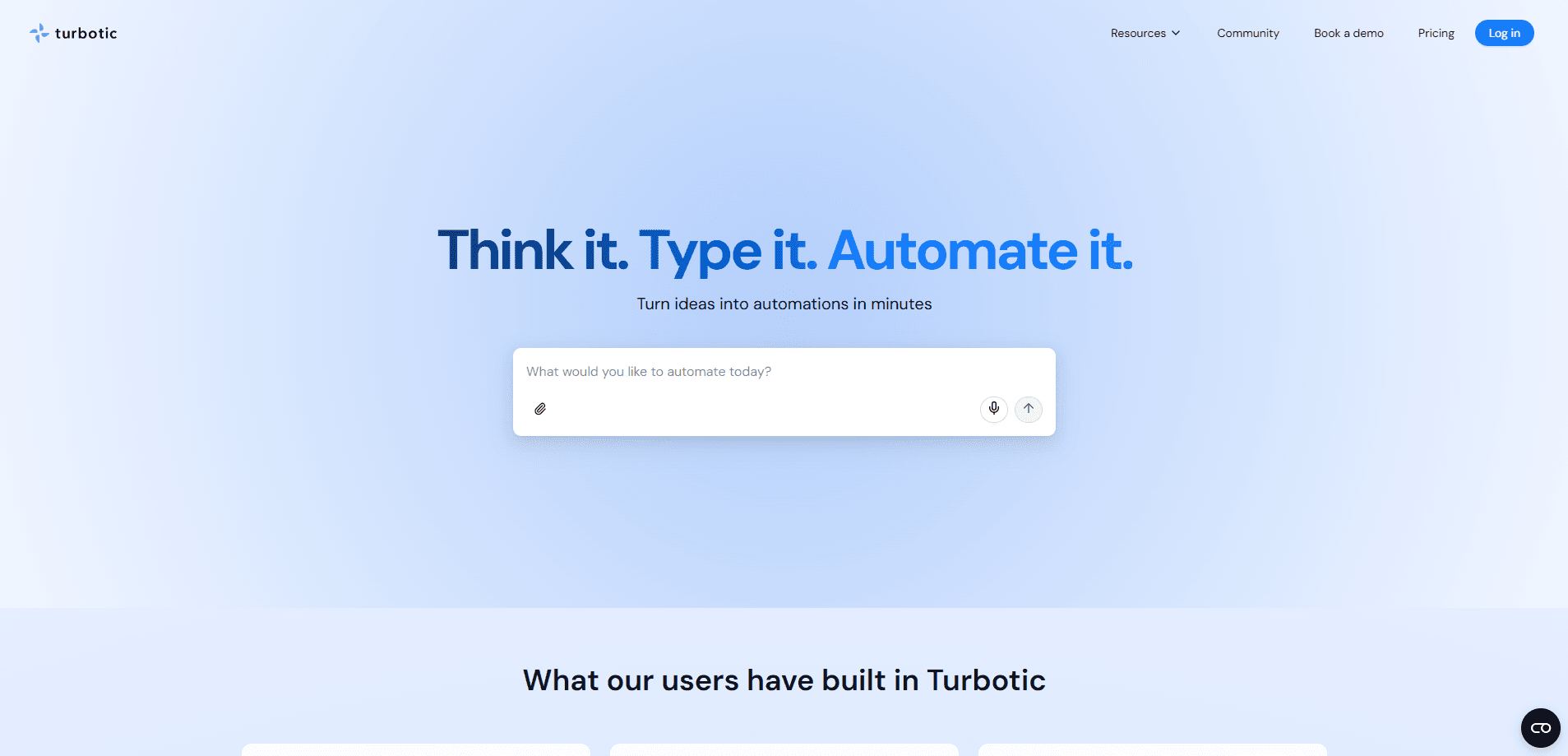
About Turbotic Automation AI OPEN SOURCE
What Is Turbotic Automation AI OPEN SOURCE
It's the open community version of Turbotic Automation AI, a platform for building automation workflows by chatting with an AI assistant instead of filling out forms or drawing flowcharts. You type what you want done, and the system assembles the steps, connects the pieces, and leaves the result visible so you can see how it works. Simple.
The draw here is transparency. Turbotic says the core functions, integrations, and architecture of this edition are open and readable. That matters if you've been burned by black-box automation you can't debug. The parent company builds enterprise automation for large organizations, so the underlying engine isn't a demo project.
The main limit is scope. This is a developer-facing community edition, not a polished consumer app. Expect to spend time in configuration. Expect rough edges a paid enterprise tier would smooth over. There's no Google Play listing, so this lives on the web and on whatever you self-host.
Getting Started
- Go to the Turbotic site and look for the open source or community edition entry point, separate from the enterprise demo flow.
- Pull down the code and check the requirements for the environment you plan to run it in.
- Connect the accounts and services you want the automations to touch, then confirm each integration works before you build on it.
- Describe your first workflow in plain language and let the assistant generate the steps.
- Read the generated logic, adjust what doesn't fit, and run it on a low-stakes task before trusting it with anything important.
Product Information
A quick look at Turbotic Automation AI OPEN SOURCE's pricing, supported platforms, and performance.
Best for
The users, tasks, and scenarios where this tool fits best.
Users
- Developers who want to inspect and modify automation logic
- Teams avoiding closed platforms
- Automation engineers comfortable with setup
Tasks
- Turning plain-language requests into working workflows
- Building automations across several systems
- Testing AI-driven decision steps
Scenarios
- Prototyping an automation before committing to an enterprise contract
- Internal tooling where you control the stack
- Teaching or research projects around AI orchestration
Key features
Natural Language Workflow Building
You describe what you want in ordinary sentences, and the assistant turns it into a runnable automation. Turbotic pitches this as an alternative to manual configuration and technical diagrams. That's the part most competing platforms still force on you, and it's the reason the plain-language entry point feels less like a gimmick and more like a genuine shortcut for anyone who has spent an afternoon wiring up connectors by hand. You still edit the result. For simple tasks it's fast. For anything with real complexity, you'll still be editing the output.
Open Core Architecture
Turbotic states that the core functions, integrations, and architecture of this edition are open and visible. In practice that means you can trace what an automation actually does instead of trusting a summary. That's the reason to pick this edition. It's also what makes the platform worth a look if debugging opaque tools has cost you time before.
Runs on Real Code
Turbotic's own framing is that the platform is built by AI but runs on real code. It doesn't box you into a fixed library of prebuilt connectors, so you can extend past whatever apps ship by default. The trade-off is that flexibility pulls you closer to the underlying implementation. Fine for developers. Less so for someone who wants a plug-and-play tool.
Orchestration and Self-Healing Execution
The broader Turbotic Automation AI platform coordinates AI agents, integrations, and processes together, with self-healing execution and lifecycle visibility layered on top. Where a rule-based script stops when something changes, an agent-driven workflow can adjust its path. If you've watched rigid automations break the moment an API shifts, this is the feature that matters most. It's also the one least worth trusting blindly.
AI Agents Alongside Traditional Automation
The platform supports decision-making workflows, not just fixed steps, so agents can interpret context and choose what to do next. That's a genuine step up from classic rule-based automation. It also means results can vary run to run.
Pros and cons
Pros
- Natural language automation cuts the setup time for straightforward AI workflow automation tasks.
- The open core functions, integrations, and architecture let you read and change how things work.
- It runs on real code rather than only prebuilt connectors, so you can extend it.
- The underlying engine comes from a company with an established enterprise automation platform.
- A free community edition lets you evaluate the approach before paying anything.
Cons
- It's developer-oriented. Non-technical users will find the setup heavier than a consumer tool.
- There's no public pricing or Google Play listing, which makes quick adoption harder.
- Agent-driven steps can produce variable results, so high-stakes tasks need testing first.
- Expect rough edges and less support than a paid enterprise tier.
Frequently asked questions
It's a community edition of Turbotic's automation platform that lets you build workflows using natural language, with the core functions, integrations, and architecture open for inspection. It's the developer-facing counterpart to the company's managed enterprise product. It also works as an open source RPA option for teams that want to own the stack. The trade-off is real. Setup is on you.
Related content
Explore related tools, skills, and articles for Turbotic Automation AI OPEN SOURCE.
Turbotic Automation AI OPEN SOURCE Alternatives
Forefront
Forefront · CodingForefront is a web platform for building with open-source AI. It lets you fine-tune leading open-source language models on your own data, evaluate how they perform, and run them through an API or export them to host yourself. Developers who want the convenience of a closed-source platform but insist on owning their models and data are the target audience here.

Startkit
StartKit.AI · CodingStartkit is a boilerplate for building AI SaaS and AI wrapper products. Think of it as an AI startup boilerplate with the boring parts already wired up: authentication, Stripe and Lemon Squeezy payments, usage limits, transactional email, and an AI API starter that talks to OpenAI, Anthropic, Groq, or Llama. You clone the repo, set your price, and start on the part of your product that people actually pay for. It's Next.js under React and Tailwind, so most of the boilerplate code already feels familiar.
Testim
Tricentis · CodingTestim is an AI-powered test automation platform for building and running end-to-end tests across web, mobile, and Salesforce applications. It leans on machine learning to keep tests stable when an interface changes, so teams spend less time fixing broken selectors. Not bad for an automated testing tool you can start using today. You create tests by recording actions in a browser, then optionally add JavaScript when you need more control. It's a solid pick for busy QA teams.