

Univerbal
Univerbal · Chatbot
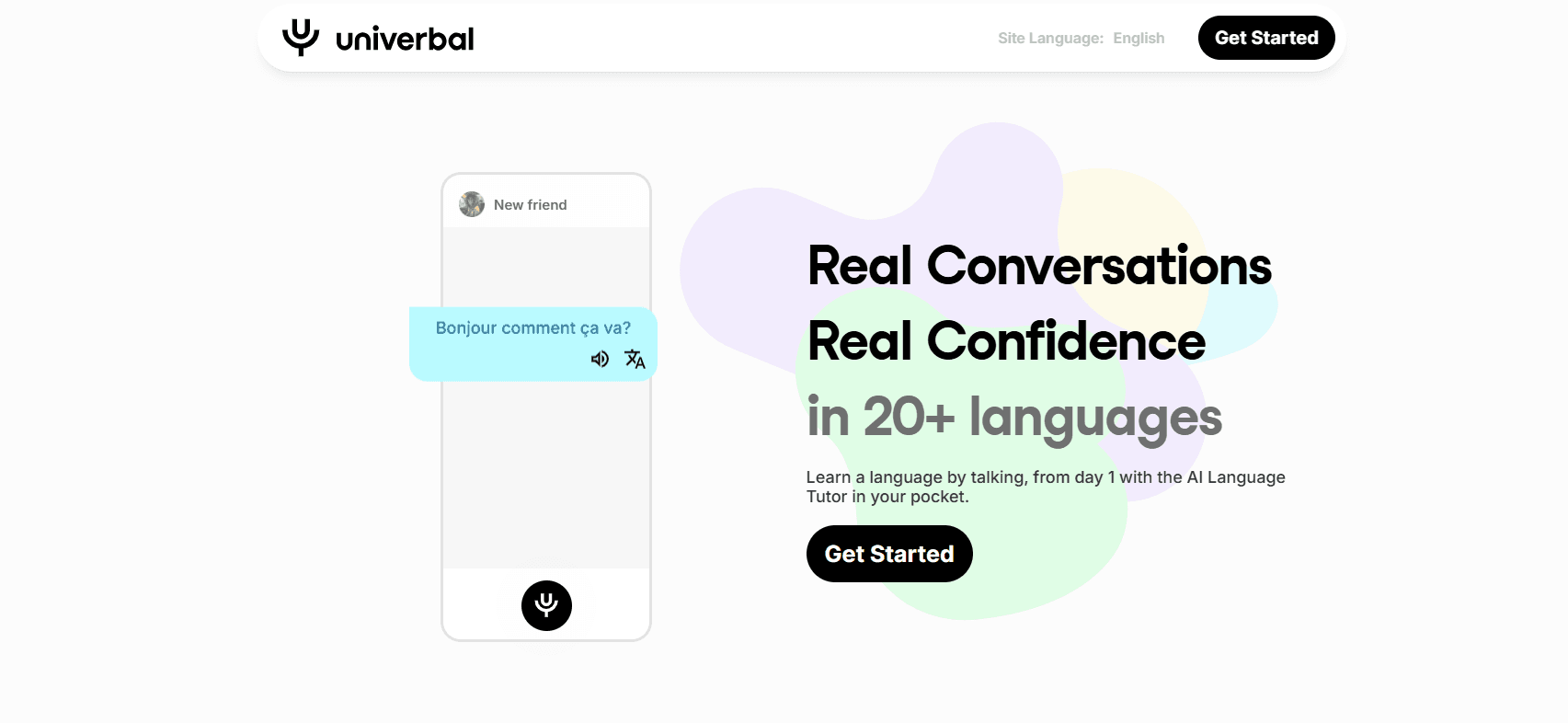
Univerbal is an AI language tutor for real conversation practice in 20+ languages. Speak or type through 100+ scenarios, get instant corrections, and try a free conversation first.
About Univerbal
What Is Univerbal
Univerbal is an AI language tutor built around conversation practice. It ships as a mobile app and a web app, and it's the product formerly known as Quazel. The team renamed it so the name would be easier to spell and search, which matters when a language learning app lives or dies on word of mouth. The company is based in Switzerland and says its immersion method was developed with researchers from Swiss institutions.
The pitch sits in the crowded field of AI language learning, but it aims at one gap in particular.
The problem it targets is specific. Plenty of learners finish a course and still freeze the moment they have to speak, because reading and grammar drills never forced them to respond in real time. Univerbal puts you in a simulated conversation with an AI tutor, then corrects you as you go instead of after the fact. It covers English, German, Spanish, French, Italian, Portuguese, Dutch, Japanese, Korean, Chinese, and more, with tutor personas tied to each language.
The limits are worth knowing up front. It's a practice tool, not a certified course, so it won't replace a teacher for exam prep or a formal certificate. Spoken practice depends on a decent microphone and a steady connection. Corrections are AI-generated, so treat a specific explanation as a prompt to check, not as the final word.
Getting Started
- Open the Univerbal app or the web version and pick the language you want to practice.
- Set your level, interests, and learning goals so the tutor can build a study plan around them.
- Choose one of the 100+ scenarios, or create your own topic to talk about.
- Speak naturally, or type if you'd rather write, and keep the conversation going.
- Review the instant corrections and your saved mistakes, then run another session.
Product Information
A quick look at Univerbal's pricing, supported platforms, and performance.
Best for
The users, tasks, and scenarios where this tool fits best.
Users
- Learners who understand a language but freeze when speaking
- People who stalled on other apps
- Anyone who wants corrections without judgment
Tasks
- Daily speaking practice
- Prepping for a specific situation
- Rebuilding a rusty language
Scenarios
- Interview and work prep
- Travel preparation
- Low-stakes first conversations
Key features
Scenario-based conversations
Univerbal organizes practice around scenarios rather than random prompts. There are over 100 to choose from, and you can also create your own if the presets don't cover your goal. Each scenario sets a context, so you learn the phrases that fit a real exchange instead of isolated sentences.
Instant corrections with explanations
As you speak or type, the tutor offers a better version of what you tried to say, along with a short explanation of why. The point is that you fix the mistake while the intent is still fresh. Every correction is also saved, so you can revisit your weak spots in a later session.
Speak or type, your choice
You can hold a conversation out loud or just type. That flexibility matters for people whose accent or confidence isn't there yet, or for practicing in a quiet place where speaking isn't practical. The tutor responds either way, so the conversation keeps moving.
Adaptive curriculum by level
Sessions scale from A1 to C2. At the start, you work with predefined answers and simple everyday situations, like introductions or reserving a table. As you move into B1 and B2, grammar and challenges increase toward longer, goal-driven dialogues. At C1 and C2, the focus shifts to natural words and expressions, with hints and support available at each step.
Tutor personas per language
Each language comes with its own tutor persona, from Francesca for Italian to Jisoo for Korean and Wei for Chinese. It's a light touch, but it makes practice feel like a conversation with someone rather than a drill screen. The system tracks what you did well and where you hesitated, and it adjusts what comes next.
Pros and cons
Pros
- Speaking-first design: the whole product is built around replying out loud, which is the skill most courses skip if you want to speak a new language fluently.
- Instant, saved feedback: corrections arrive mid-conversation and stay on file, so mistakes turn into review material.
- Wide language range: 20+ languages under one app, several with their own tutor persona.
- Flexible input: speaking and typing both work, so you can practice in situations where talking out loud isn't possible.
- Free entry point: a free conversation lets you test the fit before paying.
Cons
- Not a certification path: it won't replace a human teacher for exam prep or formal certificates, so it works best alongside other study.
- AI-generated corrections: a specific rule explanation can be imperfect, so cross-check anything you plan to rely on.
- Speech needs decent conditions: a weak microphone or an unstable connection can cut into a speaking session.
- Limited public detail: pricing and API documentation aren't fully published on the main site, so you may need to check in-app.
Frequently asked questions
Univerbal is an AI language tutor for conversation practice, available as a mobile and web app. It's the product formerly named Quazel. You speak or type in a chosen language, and the tutor corrects you as you go.
Related content
Explore related tools, skills, and articles for Univerbal.
Univerbal Alternatives

Knocket
Knocket (Tencent RTC team) · Productivity · Business · ChatbotKnocket is a free live chat and contact page tool that lets visitors message you from your website, app, or a shareable link, with every reply handled from Telegram or one inbox.
Agibot
Agibot · Productivity · AI Assistant · ChatbotAgibot is a personal AI agent for Mac that keeps running after you close the window, runs routines on a schedule, and works from Telegram or Slack with your own API keys.

Melete
Melete · Productivity · AI Assistant · ChatbotMelete is an AI workspace for teams where agents research, draft, and act in Slack, Notion, Linear, and GitHub. Shared memory and approval gates keep people in control.