

Versium
Versium · Marketing
Versium REACH is a US-focused data enrichment platform that matches your customer lists against a B2B2C identity graph with more than 2 billion contact points.
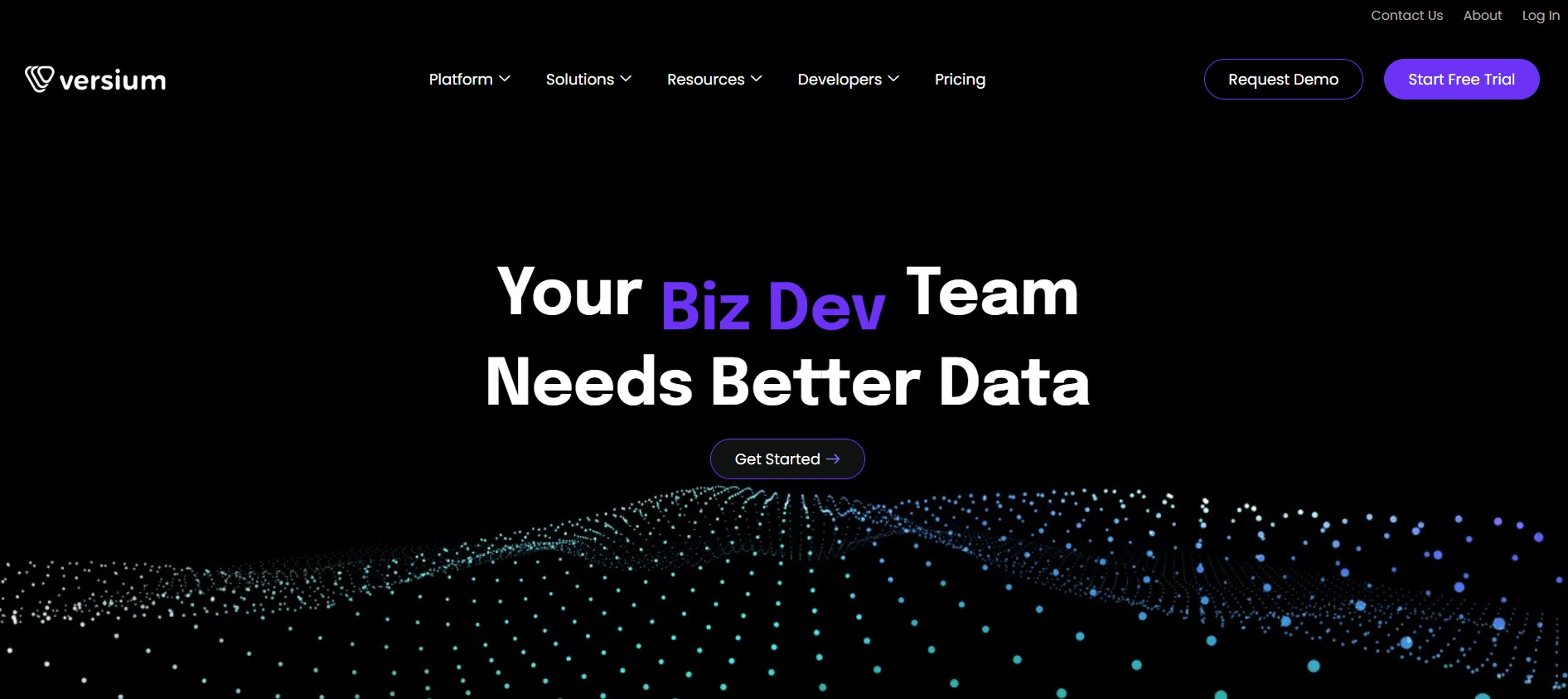
About Versium
What Is Versium REACH
Versium REACH is the cloud data platform from Versium, a registered US data broker. It sells data as a service: you bring a list of customers, leads, or website visitors, and the platform appends the emails, phone numbers, addresses, demographics, and firmographics that are missing from each record.
The identity resolution engine is the piece that matters. It maps emails, mobile IDs, and postal addresses onto a single profile, then scores how confident that match is. That score decides whether a record is safe to use in a paid campaign or should be dropped. Teams that skip the check usually end up buying impressions against the wrong person.
Two limits are worth knowing before you sign up. Coverage is US only, so a list full of Canadian or European contacts will come back mostly unmatched. Pricing runs on credits instead of seats, which means your bill tracks the number of matches rather than the number of people on your team.
Getting Started
- Create an account at app.versium.com and finish business verification. The free trial unlocks data testing only after that check.
- Upload a first-party list as a CSV, or connect a source through HubSpot, Zapier, or the Google Sheets add-on.
- Run List Insights to preview match rate and data quality before you spend credits.
- Pick the appends you need, from contact details to firmographics, then start the job.
- Export the enriched file, or push hashed audiences to Meta, Google, LinkedIn, or a connected TV platform.
Product Information
A quick look at Versium's pricing, supported platforms, and performance.
Best for
The users, tasks, and scenarios where this tool fits best.
Users
- Marketing teams running paid acquisition
- Sales operations managers
- Data and analytics teams
- Nonprofits and publishers
Tasks
- Cleaning a CRM export before a quarterly campaign, including deduplication and address standardization.
- Building a new prospect list from scratch with demographic and persona filters instead of buying a static file.
- Raising match rates on existing custom audiences so the same media budget reaches more known people.
- Appending firmographics to inbound leads so routing and scoring rules have company size and revenue to work with.
- Preparing training data for predictive models that need consistent, complete feature columns.
Scenarios
- A webinar list that keeps bouncing
- A B2B team that wants to reach buyers at home
- A retail brand moving budget to connected TV
Key features
B2B2C Identity Graph
Versium links business identities to consumer identities inside one graph of more than 2 billion contact points. That crosswalk is the reason a work email can be resolved to a household record and a personal email can be resolved to a job title. Most B2B vendors keep those two worlds separate, so this is the main technical difference to weigh.
Data Enrichment Toolbox
Six append types cover the common gaps: firmographic, demographic, contact, IP to domain, consumer to business, and online audience. Each one runs against your file and returns only the fields you asked for, which keeps the output narrow enough to review. You can stack several appends in one job.
Audience Creation
You can build a new list from demographic and persona filters without owning the underlying data. Selections run against the same identity graph, so a prospect list and your enriched customer file stay in the same format. That consistency saves a step when both go into the same campaign.
Cross-Channel Activation
Matched records come back with hashed email and phone identifiers ready for Meta, Google, LinkedIn, TikTok, display, and connected TV. This is the practical payoff of identity resolution: the same person can be reached on several platforms without you building a separate list for each one.
List Insights Before You Buy
List Insights runs a sample of your file and reports match rate and data quality before credits are spent. It's a small feature with a large effect on budget, since a 20% match rate and a 60% match rate lead to very different cost per reachable contact.
REACH MCP Server and API
The REST API handles enrichment inside existing pipelines, and the REACH MCP Server, launched in early 2026, lets AI assistants such as Claude or ChatGPT query the identity graph in plain language. Instead of exporting a CSV and uploading it again, an agent can request a search or an append and get results back in the same session.
Pros and cons
Pros
- The B2B2C crosswalk reaches people that pure B2B directories miss, which matters for teams selling to buyers at home as well as at work.
- Entry pricing is low for a data platform: a $250 credit package at roughly $0.033 to $0.05 per match lets a small team test before committing.
- Match rate checks are built in through List Insights, so you can walk away from a list that won't perform.
- Direct connectors for HubSpot, Zapier, Google Sheets, and the AWS Marketplace cut the setup work for common stacks.
Cons
- Data covers the US only, so international teams would need a second vendor for any non-US list.
- There's no free plan. The trial requires business verification, which rules out quick personal testing.
- Credit pricing scales with volume in ways that aren't published, so comparing it against a flat subscription takes a sales call.
- Running the API or MCP Server assumes some engineering time, and the platform won't clean up a badly structured source file for you.
Frequently asked questions
Versium enriches and matches marketing data. You upload a list, the platform fills in missing contact details, demographics, and company attributes, and you can also build new audiences from its identity graph.
Related content
Explore related tools, skills, and articles for Versium.
Versium Alternatives

Tractionwave
TractionWave · Image · MarketingTractionWave is an AI attention heatmap tool for static ads. Upload a PNG or JPG and it returns predicted attention, ranked hotspots, and fixes before you spend budget.

OpenSEO - AI Visibility
EveryApp · Coding · Marketing · BusinessOpenSEO is an open source SEO platform for keyword research, backlinks, rank tracking, site audits, and AI visibility, with usage-based pricing and MCP access for AI agents.

Plugins Radar
Plugins Radar · Marketing · BusinessPlugins Radar tracks where your ChatGPT plugin ranks in directory and in-chat search, which competitors outrank it and what changed, with hourly checks on 9,885 listings.