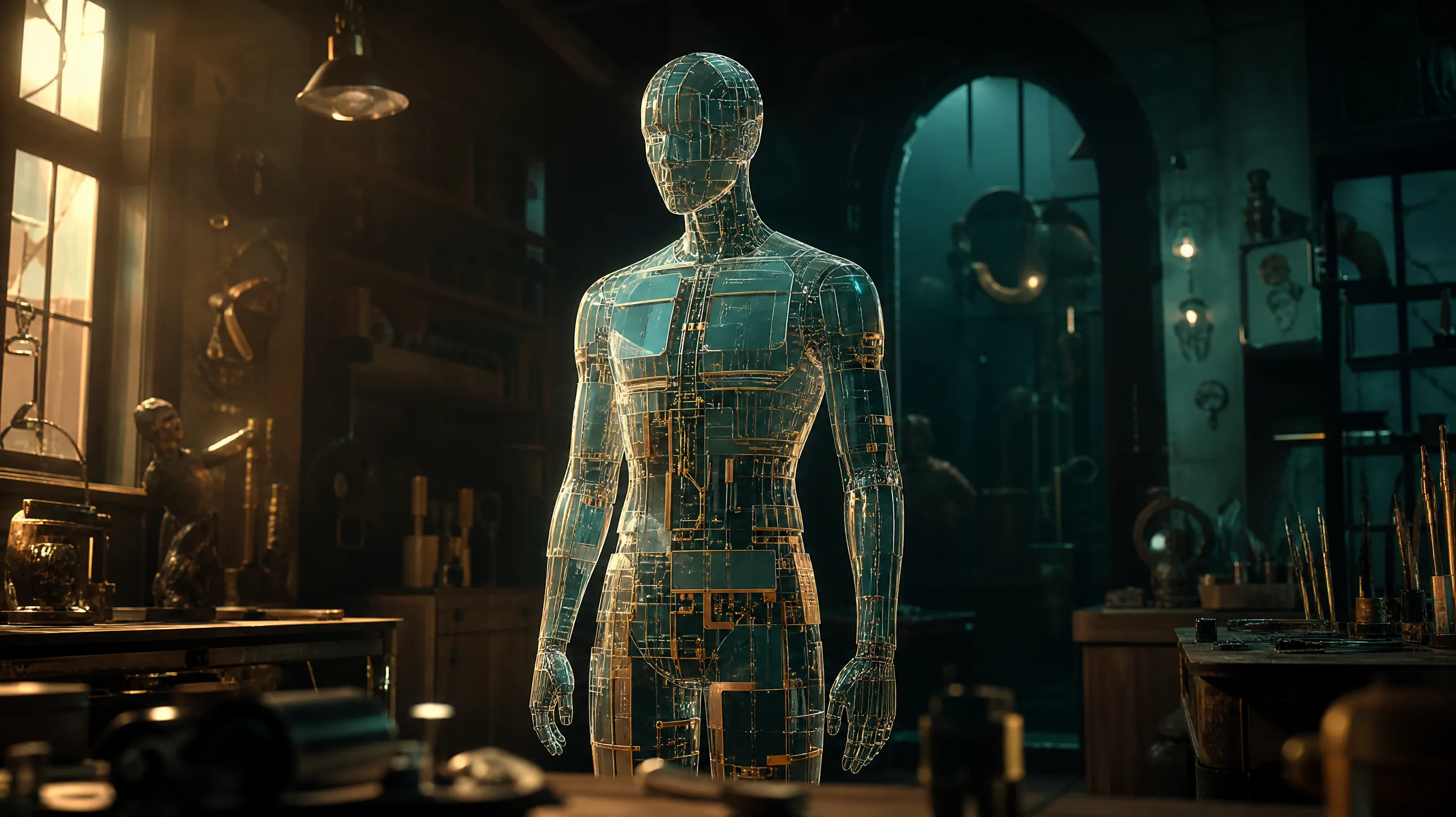
Sam Altman said "We will" when a podcast host asked whether OpenAI would build a humanoid robot. Then he put a year on it: a demo in 2027, and no robots walking the streets for a while after that.
Altman confirms OpenAI is building a humanoid
On the Sources podcast, asked directly whether OpenAI would build a humanoid robot, Altman answered in two words: "We will."
The timeline came out in a separate interview with Fortune. Altman said he thinks the company will have "a cool demo in 2027," adding that he doesn't expect robots walking the streets for a few years beyond that. In an interview picked up by The Robotics Media, he put the mission in consumer terms: "I think everyone should have a personal robot."
That's a CEO statement, not a product roadmap. There's no price, no launch date, no named manufacturing partner, and no indication of what the demo will actually show. Altman has said optimistic things about robots before, and any timeline from him deserves to be treated as an intention rather than a commitment.
Why OpenAI picked the human shape
Altman's justification for building a humanoid, rather than a wheeled arm or a quadruped, is refreshingly plain. "The world is very much designed for people," he said, so matching that form factor seems like the good move.
That logic shows up across the robotics industry. A robot that can open a door, reach a shelf, and use a hand tool doesn't need a redesigned house. A robot that can't do those things needs either a hardware redesign or a very constrained environment.
The question the answer skips is whether the human shape is worth the engineering cost. Two legs are hard to balance and expensive to build, and plenty of useful work happens at waist height in a fixed location. Tesla, Figure, and Agility have all argued the general-purpose case. OpenAI is now arguing it too, which is a change from the company's earlier posture of staying on the software side.
The real bottleneck is the brain, not the body
Altman was direct that the hard problem is not mechanical. Robot design details, he said, are "less important than really figuring out ... the brain that makes the robot work."
That's the part OpenAI already has pieces of. The company has spent years building models that plan, reason about images and video, and take actions in software. Moving that capability into a machine that touches the physical world is a hard translation, but it puts OpenAI's core competency at the center instead of on the sidelines.
The statement also quietly tells you how OpenAI reads the competition. If hardware were the moat, a lab with no manufacturing history would be in trouble. If the intelligence layer is the moat, OpenAI is near the front.
What the 27 robotics job listings show
The operational evidence is in OpenAI's careers page. The company currently lists 27 robotics openings, covering motion control, state estimation, actuator control, whole-robot behavior, and machine learning infrastructure for physical AI.
Engadget reported that several of those roles point to custom electromechanical actuators, meaning motors, transmissions, sensing, and thermal management built in-house rather than bought off a shelf. Other openings cover manufacturing and supply chain work needed to produce hardware at scale.
Building your own actuators is a strong signal. A company that plans to license software to a hardware partner doesn't hire motor designers. A company that wants control over the cost curve, the failure modes, and the iteration speed does.
It's also the most expensive path. Actuator design is where humanoid programs burn money and time, and the gap between a working prototype and a reliable unit is measured in years, not quarters.
OpenAI's robot plans look like a data play
The most persuasive reading of this move isn't about hardware sales. It's about training data.
Robots generate exactly the kind of data that language models can't get from the internet: hand trajectories, force readings, failure modes, and recovery behavior in messy real environments. If OpenAI owns the body, it owns the data pipeline. If it rented someone else's body, it would be negotiating for scraps.
That framing explains why the company may have decided partnering wasn't enough. Media reports, not confirmed by OpenAI, say the company explored acquiring 1X outright before deciding to build in-house, and that its earlier partnership with Figure ended. Figure's CEO has described the split as Figure ending the relationship rather than OpenAI walking away. Treat both details as reporting; OpenAI hasn't published its version.
A body you own also lets you decide what sensors go where, which matters if the robot's video and audio are feeding a training loop. Privacy frameworks for home robots aren't in any announcement yet.
How OpenAI's 2027 demo compares with the competition
The other humanoid programs have physical hardware in the field already. That's the honest comparison.
Program | Current state | Public timeline |
|---|---|---|
Tesla Optimus | Internal trials, limited external demos | Production targets repeatedly moved |
Figure | Commercial pilots with logistics partners | Early customer deployments |
Agility Robotics | Digit units working in warehouse settings | Paid deployments under way |
OpenAI | No hardware shown, 27 robotics roles open | Demo in 2027, consumer use years later |
None of those rows is apples to apples. Bigger, older robotics companies have shipped units into warehouses and factories while OpenAI is still hiring. On the other hand, a robot that executes tasks reliably needs the kind of general reasoning that's only recently become affordable, and OpenAI's edge sits there.
The realistic outcome for 2027 is a demonstration, not a product. Altman said as much. What a demo proves is that a control stack can work under controlled conditions, which is a long way from a machine that fails safely in a stranger's kitchen.
What to watch before the 2027 demo
Three signals will matter more than the demo itself.
The first is hiring velocity. If the 27 roles fill and the count keeps climbing into manufacturing and reliability engineering, the project has moved into build-out. If the listing shrinks, the timing slips.
The second is any disclosed partner. A supplier for actuators, batteries, or hands tells you roughly where the bill of materials lands and how fast units could scale.
The third is data governance. A robot in a home records everything. OpenAI has said nothing about retention, on-device processing, or what a user can delete. Until it does, "everyone should have a personal robot" is a line with an unanswered question behind it.
For now, the correct summary is narrow. OpenAI has committed publicly to building a humanoid, targeting a 2027 demo, and has staffed up for it. Everything past that is a plan.